GC Corner: An interview with Kevin Burwell
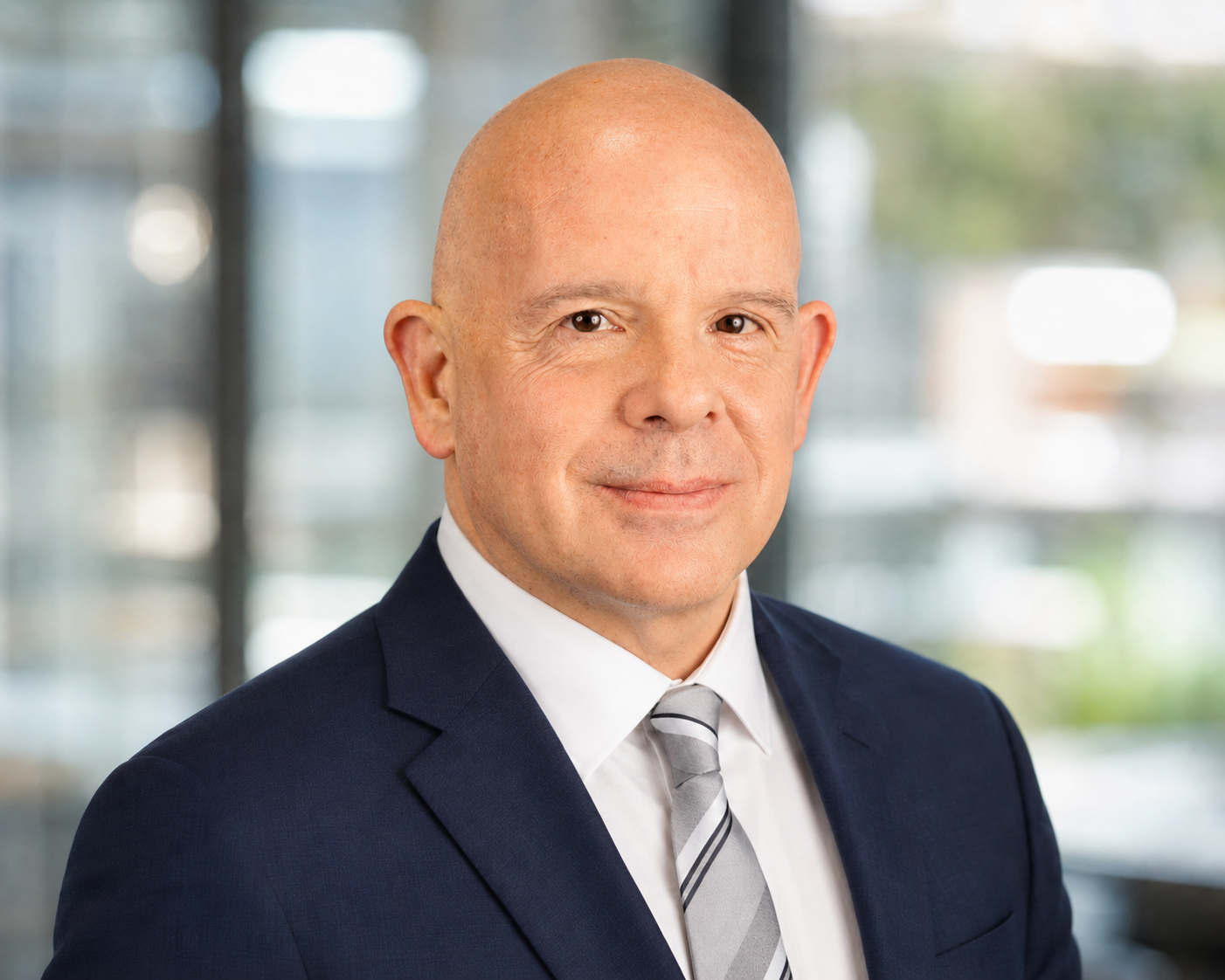
Since 2024, Kevin Burwell has been Vice President & General Counsel for Kloeckner Metals Corporation, a $5B steel manufacturer headquartered just outside Atlanta, with nearly 60 locations throughout the U.S. and Mexico. As Kloeckner’s first General Counsel, he is tasked with developing the governance, regulatory, and compliance team for the Americas, and aligning that with Kloeckner’s German parent company.
Previously, Kevin spent several years as the first GC for Knight Materials, an international manufacturer and installer of corrosion-resistant materials headquartered in Northeast Ohio. With background from his time at a steel mill, a law firm, a maritime port, and as a board director, he continues to bring unique perspective and qualified guidance to his clients.
He is currently a member of the Wall Street Journal’s Chief Compliance Officer Council as part of its Leadership Institute, University of Akron’s National Board of Directors of the Alumni Association, Kent State Economics Advisory Board, and has served on the board of the National Association of Foreign Trade Zones. Kevin has an Economics degree from Kent State University and a J.D. from the University of Akron School of Law.
He and his wife, Leigh Ann, are enjoying their relocation from Ohio to Georgia, while remaining close to their four adult daughters and two granddaughters.
Your team is navigating major transformation and scale at the moment. What does sustainable high performance actually look like inside a modern legal team?
It looks like regular check-ins among team members, consistent focal points for issue intake, and reasonable paths for escalation. If everything is the highest priority, then nothing is a priority. Sustainable performance is predictable, prioritized, and system-driven—not heroic.
I stick to my boundaries – whether it is out the door by 5PM (even if I hop on my laptop for a few moments later in the evening) or declining a meeting because I already accepted another (first come, first served, maybe?). And I remind the team to stick to their boundaries as they create them.
I also remind my team to eliminate the perspective that they are catching up on email, but rather they are re-engaging in conversations. We should not spend a week on vacation just to try to do 40+ hours of work on the following Monday morning.
Many legal departments are operating under constant pressure to move faster and do more with the same resources. Where do you think the traditional legal operating model is beginning to show strain?
The traditional model breaks down in unstructured intake (“everything is urgent”). And the over-reliance on individual expertise vs. scalable systems. Legal teams are expected to scale like operations—but often without operational infrastructure.
The most underpriced risk in growth is the assumption that controls, culture, and accountability will scale on their own. Revenue scales. Headcount scales. Technology scales. But governance doesn’t—unless you deliberately rebuild it.
Growing companies often assume yesterday’s success is proof that today’s risk is manageable. What they underestimate is how quickly decision velocity outpaces oversight. Authority diffuses, processes get informal, and exceptions become the norm—right at the moment the company is becoming more visible to regulators, plaintiffs, and the market.
If the legal team is grouped in a random corner, isolation is inevitable and then issue management is nothing but reactionary. Legal teams must be embedded in the business. They must be in regular touchpoint training for all teams and included on regular business unit reviews.
During our recent panel discussion for In-House Connect, you spoke about the importance of protecting your team when workload outpaces workflow. What have you learned about capacity management as a legal leader?
Protecting the team ultimately protects decision quality and risk outcomes. If demand is always expanding and moving, then capacity must be intentionally constrained. It might be practical to introduce a formal intake and triage process, but that also means being transparent with the business units. Don’t complain about overwork—everyone in other groups feels the same anyway—but rather remind them that questions and issues should stick to that process. That means avoid sending a quick Teams message for an answer.
Tell the business unit leaders that legal must provide good counsel, and to do that, the legal team needs to stay in that process. It gives those business units what they really need, even if they think that what they need is the immediacy of the answer.
Legal leaders are often expected to absorb pressure quietly while remaining calm for everyone else. How do you personally manage that responsibility without becoming the “shock absorber” for the organization?
I often say that much of my job is to nod my head while business leaders present their problems and their creative solutions. Many of our business answers are already in our business history and those managers just want confirmation or consensus. They want to know that they have been heard and they are not alone. If I respond with panicked tone, I am not helping – even if I see a dire emergent issue under the surface. Discipline gives me the chance to calm situations.
At GCWN, we’ve been discussing the shift from wellbeing as an individual responsibility to wellbeing as a systems design challenge. What systems or team norms have made the biggest difference inside your own legal function?
Our team works from weekly all-hands meetings with preset agenda items, which are contributed by every team member. This quick review of the most salient items, or those items that have complexity that need attention from a variety of sources, or upcoming deadlines keeps all informed and gives a platform to hear and discuss.
Being part of a company that emphasizes wellbeing through all management levels makes the biggest difference. At Kloeckner Metals, we put safety and wellbeing together as the Safety 360 program. Safety is directly affected by the physical and mental wellbeing of each employee, so everyone focuses on what it takes to show up and get the job done safely, no matter what the role.
You’ve spoken previously about creating environments where different perspectives can emerge. What does psychological safety actually look like in practice inside a high-performing legal team?
It is any member of the team standing in the doorway of any other team member and asking direct questions. It is the General Counsel asking for opinions—and then using those opinions—and giving clear and open credit.
What it does not look like is a series of red-faced blowups, emails with harsh tone, or defensive posturing. Being amenable to admissions of a lack of knowledge and typing errors enables one to rapidly move past a mistake after acknowledging it.
AI is rapidly changing expectations around speed and responsiveness. What capabilities do you believe will matter most for in-house lawyers over the next 3–5 years?
In-house counsel will need to be capable of rapidly assessing the validity of results, no matter the topic. That means understanding the business beyond its core competencies.
Of course, it will be essential to know how to work with all of the developed AI tools, just as lawyers have to understand a Boolean search, or formatting spreadsheets. We have learned skills as technology has evolved over these past few decades. And we apply and improve those skills.
But I do think that it will be those who take the time to study topics like philosophy or the humanities, and can translate those AI resources to human responses, or build personal eye-to-eye networks, who will have the best broad scope success.
What’s one leadership behavior or mindset you’ve consciously had to unlearn as your career has evolved?
Throughout much of my career, that imposter syndrome crept into way too many of my thought processes. I felt as though my team was testing me with each question—looking for my flaws and weaknesses. That anxiety happened whether it was from above or below. Too many times, I was preparing a defense in my mind for that wrong, or lacking, answer.
Someone then told me, “If they are asking, it’s because they don’t have the answer either.” So, I learned to admit early that I might not know and began to ask the questioner if we could possibly figure it out together. I asked for their assessment, which in many cases was the correct one as they had the most direct view of the scenario.
My early career was leadership by immediate answer—and now, it is leadership by teamwork.
Outside of work, what helps you properly switch off and recover when things become intense?
A good walk with music or a podcast. Or behind a drumkit for a while. Mostly, I know a dinner out with my wife will always set things right. Because that is where we focus on each other—eye to eye—and have our best talks. We are committed to the moment. We are each other’s best friends and we communicate as such.
If you can see the intensity coming, and prepare for it, recovery is much easier because less damage is being done. When I joined Kloeckner, I knew that just the aspect of relocation to another state would create an intensity. Even more so the enormity of the role. So I immediately used our company benefits to find a therapist and work my way through the transitory period.