
The Human Side of Hiring: Building career options before you need them
A successful legal career can create a quiet assumption that the next opportunity will find us. Earlier moves may have arrived through a recruiter, a trusted contact or a reputation built through good work. As responsibility grows, it is understandable to expect that pattern to continue.
Yet the senior market operates differently. There are fewer relevant roles, strong candidates competing for them and a greater emphasis on the particular needs of the business. Professional accomplishment does not automatically translate into visibility. A General Counsel can be highly valued inside their organisation while remaining largely unknown to the people who might shape their next move.
Our latest GCWN Frontline conversation on the human side of hiring brought that gap into focus. Alongside insights from recruitment and in-house leadership, the community shared experiences of silence, uncertainty and the difficulty of being remembered when an opportunity appears. The questions extended well beyond writing a better CV. They concerned how to retain confidence, understand the market and build relationships while managing a demanding role.
The central lesson is that career resilience can be designed. A sustainable system of relationships, market awareness and wider experience creates more choice when circumstances change. The best time to build it is oèen when we are secure enough to think clearly about what we want.
Understand the machinery
Recruitment can feel like a single opaque system. An application goes in. A response may or may not come back. In the absence of information, it is easy to assume that technology is making the decisions.
In our opening live poll, 44% of participants thought more than half of recruitment was already automated, while 16% genuinely did not know. These responses reveal a perception of the process. They do not establish how much automation is actually taking place.
The picture emerging from the discussion was more uneven. Technology supports administration, sourcing and the processing of large volumes of applications. Senior legal hiring remains much more dependent on human judgement, relationships and an understanding of the organisation behind the brief. Finding a GC involves assessing qualities that neither a job specification nor a CV can fully capture.
Recruitment is not one market, and not every process is suited to every level of role. A credible senior candidate may enter a channel designed to handle volume, with crude filters and little room for nuance. An apparent rejection may say as much about the channel as about the candidate. Filters can reduce complex circumstances to binary answers. A six-month contractual notice period, for example, might become a reason to exclude a candidate even when a conversation would reveal the possibility of a much earlier agreed departure. The form records the constraint yet the conversation reveals the context.
Internal talent teams, broad recruitment firms, specialist legal recruiters and retained executive search consultants offer different routes into the market. Understanding who holds the mandate, how close they are to the decision makers and what they know about the real brief helps a candidate choose where to invest their energy. At senior level, retained searches often sit exclusively with one firm, limiting the choice of consultant for a particular opportunity. Access can therefore depend on managing that relationship constructively. A strong rapport also helps a consultant recognise the candidate’s fit when other briefs arise.
This understanding also matters when GCs build their own teams. A process designed for high volume may lose the nuance required for a senior appointment. The hiring route should reflect the judgement and leadership the role demands.
Silence is not a verdict
Few aspects of recruitment expose the human cost of a poorly designed process more clearly than ghosting.
In our live poll, 86% of respondents reported having experienced it. A third selected the option describing ghosting even at senior or executive level. The experience was plainly shared across the room, despite the seniority of those involved.
Behind an application may sit considerable thought. Someone has weighed the consequences of leaving, considered the effect on their family and begun to imagine a different future. At the receiving end, the same application may appear as one item in a crowded queue. AI-generated applications submit- ted indiscriminately can increase that congestion, while the number of relevant opportunities varies across sectors and circumstances.
The mismatch helps explain silence. It does not remove the responsibility to communicate. Silence can be especially damaging when someone is already unhappy or uncertain. It creates space for an interpretation that may have little to do with the actual process: perhaps my experience no longer matters; perhaps I have fallen behind; perhaps there is no place for me. A lack of feedback becomes a judgement on personal worth.
Understanding the machinery helps interrupt that interpretation. A recruitment outcome reflects a particular brief, context and process. It cannot provide a complete assessment of an individual's contribution or potential.
There is also room for action. Following up directly and without emba- rrassment is reasonable. A considered reminder, followed by another if necessary, can clarify the position. Repeated silence then becomes information about the relationship itself. Is this someone who unders- tands the candidate and will represent them with care? Where alterna- tives exist, energy may be better invested elsewhere. Where a consultant holds an exclusive mandate, a professional relationship and clear expectations remain important even when the chemistry is imperfect.
Good recruiters set expectations at the outset about timing and feedback, and say plainly when a role is not the right fit. That candour should be part of how a candidate judges the relationship.
Perspective is easier to maintain when one application does not carry the whole weight of a future. Relationships, wider interests and sources of energy beyond work help protect the confidence needed to keep making good decisions.
The visibility gap
If the right role became available tomorrow, would the right recruiters think of you?
Only 10% of participants in our third poll were very confident. Another 43% were fairly confident, while almost half were either not very confident or thought probably not. The gap between accomplishment and visibility deserves attention.
An established career provides evidence of capability. It does not ensure that the evidence reaches the right people at the right moment. Earlier career moves may have involved several suitable vacancies presented at once. At senior level, the pool narrows, the requirements become more specific and the time needed to establish a relationship can lengthen.
A strong CV remains important. It should make relevant experience easy to understand and be adapted to the opportunity. But credentials alone cannot convey how someone leads, exercises judgement or influences a business. When several candidates have excellent records, those human qualities become central.
Being remembered begins with meaningful contact. At this level, recruiter relationships rarely develop through a single transaction. A twenty-minute call may lead to a longer conversation, then coffee and eventually lunch. Each exchange provides another opportunity to understand one another. Meeting in person can reveal aspects of conduct and communication that remain less visible on a screen. Trust takes time to develop, which is why these conversations are best begun while happy and settled, before an urgent move places pressure on the relationship.
Gravitas can be understood as the positive impact of authentic behaviour. That impact extends across an encounter, from the receptionist to the chairperson. It becomes visible in how someone listens, treats others and responds when the interaction is less rehearsed. The details of a conversation may fade but the impression often remains.
Communicate as a business leader
Legal training encourages precision and the ability to explain how an answer has been reached. Senior leadership also requires the judgement to recognise how much explanation the situation needs.
People often want the time rather than an account of how the watch is built.
A CEO with five minutes available needs to understand the decision, its implications and the contribution a candidate could make. A technically exhaustive explanation can obscure that contribution. Clear, concise communication allows expertise to become useful to the person receiving it.
This requires a broader account of professional identity. A senior in-house lawyer brings legal and governance expertise to business leadership. The career narrative should therefore extend beyond matters handled and responsibilities held. It should make clear what changed through the individual's involvement, which decisions improved and how others were enabled to perform.
Visibility should support that account. A complete, accurate LinkedIn profile can make experience discoverable without requiring a constant stream of posts. Quality matters more than frequency. Would a CEO or CFO understand the profile quickly? Could a trusted contact explain the individual's strengths to somebody else? These are useful tests of whether the message is doing its job.
Authenticity does not require a manufactured public persona, nor does it mean saying everything in every setting. When the reason for a move is a dicult boss, a truthful explanation can remain brief and factual. Describing the environment in which we do our best work is more constructive than reliving every conflict. A recruiter has responsibilities to the hiring client, even when the relationship feels personal. Warmth and trust still require discretion.
The same principle applies in an interview. Questions about AI may appear increasingly in senior briefs, but the underlying questions still concern leadership, commercial understanding and judgement. Preparation should establish what the employer actually needs, rather than assume that every organisation expects the same level of technical knowledge. Active listening and an honest account of experience are more persuasive than trying to bluff through an unfamiliar subject. Curiosity makes a gap in knowledge something to work with.
Build the house before you need it
When did you last speak with a recruiter while you were not looking for a job?
In our final poll, 45% of participants had done so within the previous three months. More than a quarter had not done so for over a year or only engaged when actively searching. These habits create different starting points when an unexpected change arrives.
Building relationships while secure is a way of understanding the market. Conversations reveal how roles are evolving, which experience is valued and what an attractive next step might look like. They also give others time to understand a person's contribution before a search becomes urgent.
This needs a manageable rhythm. A busy GC cannot attend every event or maintain constant contact with every recruiter. A few well-chosen conversa- tions, sustained over time, can provide more value than a flurry of generic messages in response to a crisis. The task is to build the house before it is needed.
The relationships should extend beyond recruiters. Other GCs are approa- ched about roles they do not want. Law firm partners speak with CEOs and CFOs. Investors may see opportunities across a portfolio of businesses. A trusted connection can recognise a fit and make an introduction that a CV alone would struggle to secure.
These exchanges depend on reciprocity. Making useful introductions, sharing insight and showing interest in another person's work creates a relationship with value beyond the immediate prospect of a job. It also makes maintaining that relationship a more natural part of professional life.
Connection changes the balance
One of the clearest lessons from our first two years of GCWN is how quickly a secure role can change through events beyond the individual's control. Acquisitions, mergers and changes in leadership can alter a legal function even when its people are performing well.
In-house careers carry a particular concentration of risk. A legal leader's fortunes are closely tied to one business. If that business struggles or changes ownership, the consequences can be immediate. Staying connected while content in a role is therefore part of responsible career management.
Peer relationships offer more than introductions. They provide a view behind the polished account of an organisation or a recruitment process. Someone may know how a business really operates, where a GC has influence or which consultant has treated candidates well. That intelligence helps an individual evaluate an opportunity as well as pursue it. A role that looks attractive on paper may prove a poor fit for the way they want to work, or an opportunity better declined.
The power of community lies partly in this change of perspective. A candidate may initially feel that all the judgement sits on the other side of the table. Trusted peers help restore the ability to ask better questions and make a choice of their own.
Experience beyond the day job can strengthen that judgement further. Board service, school governance or chairing an organisation offers a different view of leadership. Receiving advice from the other side of the board table can change how we think about the advice we give. Voluminous papers feel different when we are the person expected to act on them.
Such roles take time to find and develop. They can broaden capability now while preparing for a later portfolio career. They also provide another source of confidence and purpose when the day job is diçcult or a recruitment process is unsettling. Knowing that our contribution is valued in more than one setting helps prevent a single job from carrying the whole weight of professional identity. The wellbeing value is immediate, alongside the opportunities these experiences may eventually open.
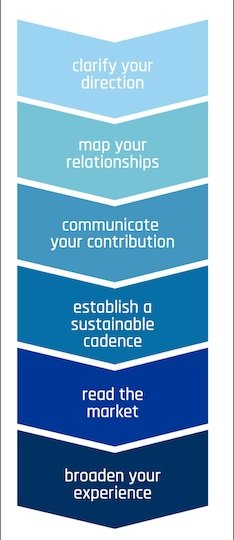
Designing your career system
The design lens we apply to legal leadership can also be applied to a career. Start with the current experience, identify where options are limited and test a small change. Review what helps and adjust the system as circumstances evolve.
The following practices translate that approach into something a busy legal leader can begin this month.
1. Clarify your direction
Write one page describing the kinds of role that would attract you, the business problems you are equipped to solve and the conditions under which you would stay where you are. Include constraints on geography, sector and timing. This is a working hypothesis to test through conversations. It gives a recruiter or trusted peer something specific to respond to.
2. Map the relationships
Identify a small number of relevant search consultants, specialist legal recruiters, peers, law firm partners and business contacts. Note who knows your work, who understands your aspirations and who could offer a candid view of a target organisation. Ask trusted peers whom they rate and why. Distinguish access to a particular mandate from the quality of a longer-term relationship. When discussing a role, ask whether the mandate is retained and whether it is exclusive, whether the consultant has met the hiring manager, what the process and timeline look like, and how feedback will be given.
3. Make your contribution easy to understand
Refresh your CV and public profile around scope, contribution and leaders- hip. Prepare two or three concise examples of decisions or changes you led and what they achieved. Adapt the evidence to each opportunity. Give the people who might recommend you a clear account they can carry into another conversation.
4. Establish a sustainable cadence
A meaningful conversation every few weeks and a quarterly review offer a starting rhythm. If you are happy in your role, say so, while explaining what would tempt you to consider a move. Set expectations about discretion. Share useful intelligence, make introductions where appropriate and follow through. The rhythm should fit the life you already have.
5. Notice what the market is telling you
Keep a private record of conversations, the quality of follow-through and what you learn about organisations. Identify questions still unanswered and experience that may need developing. Measure progress through relationships strengthened, useful referrals and clearer understanding, alongside any interviews. The system should improve the quality of your choices, not simply increase the volume of activity.
6. Broaden your experience
Choose an experience that develops judgement beyond your current remit. Board service, mentoring, a cross-functional assignment or exposure to another operating model may all help. Consider the capability gained, the sense of purpose it offers and the energy required. Review the whole system every three months, keeping what is useful and changing what has become performative.
These practices are a starting design. The appropriate cadence and network will differ by person and market. Small experiments help reveal what is sustainable and where the most useful relationships can develop.
A different kind of security
Career resilience is the ability to make informed choices as circumstances change. That may mean moving, declining an opportunity or remaining in a role with a clearer understanding of its value. Relationships provide perspective, visibility creates access and wider experience strengthens judgement. Together, they reduce the weight placed on any single recruitment outcome.
There is a corresponding responsibility when legal leaders hire. Candidates should be able to understand the process, receive clear communication and feel that their time has been respected. Sharing the salary range and process timeline at the outset helps candidates make an informed decision about whether to proceed and reduces avoidable withdrawals later. The qualities sought in a future leader ought to be visible in the experience of applying to join the organisation.
The connection between wellbeing and performance runs through both sides of hiring. Confidence affects how a candidate communicates. A fair process helps people exercise judgement. A trusted community provides perspective when uncertainty makes that difficult. Career resilience becomes a practice of leadership, built through the systems and relationships we maintain over time.