GC Corner: An interview with Mohammed Majid
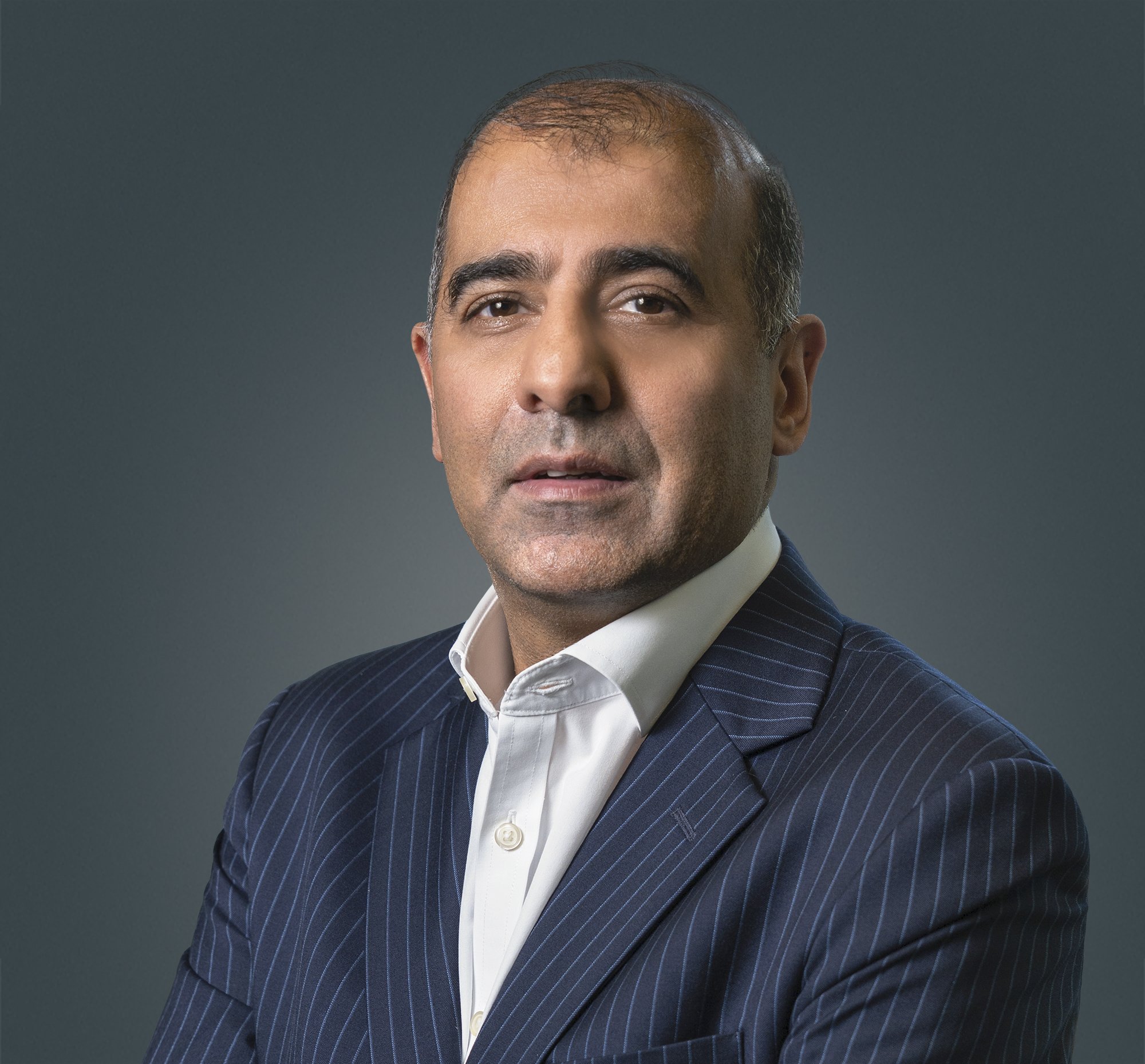
Mohammed Majid is the Chief Legal Officer/Group General Counsel and a Board Member of the Dubizzle Group and has overall responsibility for the global legal function spread across MENA. The Dubizzle Group has built and grown the Dubizzle and Bayut businesses in the UAE and MENA, each of which are amongst the most iconic technology brands in their respective markets.
Mohammed joined Dubizzle in 2020 having spent the previous 15 years in private practice. He retired from the partnership of the top five global law firm, CMS where he had been trusted counsel to Dubizzle and several other high-growth companies on market-defining transactions.
Mohammed has been based in the Middle East since 2011, prior to which he was based in London as a private equity lawyer. While in private practice, Mohammed was consistently recognised across the leading international legal directories as a leading corporate M&A lawyer.
Since joining Dubizzle, Mohammed has led on the Group’s M&A activities, including acquisitions, disposals, joint ventures, minority investments, restructurings, venture capital and investment work across a wide variety of markets.
You spent 15 years advising businesses as a private practice partner before moving in-house. What changed most in your understanding of leadership when you moved from trusted adviser to the person ultimately accountable?
In private practice, you give your advice, the client thanks you (sometimes!) and very often you move on to the next matter. You rarely see what happens next: whether the advice worked, what it meant for the business, or how it landed with the people on the receiving end (often people who never instructed you). For fifteen years that was my world and I enjoyed it immensely.
Moving in-house changed that completely. Now I see the consequences of most if not all of my recommendations, good and bad, and I live with them. I see the commercial impact, but more importantly I see the people it affects: the colleague whose role may change after a transformation project, the team that has to implement a new process, the CEO or founder who has to take a decision partly on the strength of my view.
That shifted my understanding of leadership. As an adviser, success was being right. As the person accountable, success is being right, taking people with you and staying around to own the outcome (even when it turns out not to be right!). It has made me more thoughtful about how I communicate and far more conscious that behind every legal issue there are people who will feel the impact long after the advice has been given.
Dubizzle is a home-grown technology business that has expanded rapidly across MENA. How does being part of a high-growth business change what is expected of the General Counsel beyond providing legal advice?
Dubizzle Group is the UAE’s first home-grown unicorn and we own two of the best-known consumer brands in the country. Dubizzle started life in Dubai in 2005 and is now the go-to marketplace for cars and classifieds, and Bayut is the UAE’s leading property portal. Together they are part of everyday life here: millions of people (more than half the UAE’s population) use our platforms every month to find a home, buy or sell a car, or pass on something they no longer need and we work with thousands of agencies, developers and dealerships. That brings a real sense of responsibility and it also means the business moves very quickly.
The regulatory and commercial landscape across the region is changing all the time and the legal team cannot be the department that slows things down. The expectation is that the General Counsel is part of the leadership conversation from the start: working with the business to mould strategy, spotting risk early and finding a way to get to “yes” safely rather than simply explaining why something can’t be done.
In practice, that means being as comfortable talking about our business, products, people and growth as it is about the law. It means knowing when a good answer today is more valuable than a perfect answer tomorrow. And it means building a team that thinks like the business, understands our customers and feels ownership of the outcome, rather than one that waits on the sidelines to be asked.
You've been closely involved in acquisitions, investments and expansion across different markets. What have those experiences taught you about leading through change, particularly once the deal itself is done?
Over the past few years we have grown the group considerably through acquisitions such as Property Monitor, DriveArabia and Hatla2ee, alongside building organically in the UAE, Saudi Arabia and Egypt. The biggest lesson from all of it is that signing a deal is not the finish line; it is the starting line. In private practice, as an M&A lawyer, closing was the moment of celebration. You signed, you had the closing dinner (and caught up on sleep) and you moved on to the next transaction. That was often the end of my involvement.
In-house, I learned very quickly that once the deal is done, the real hard work begins for the business. In our experience, integration realistically takes 18 to 24 months and that is where the value of a transaction is either realised or lost: in bringing systems, processes and, above all, people and cultures together. That was a real eye-opener for me.
Change is unsettling, particularly for teams joining a larger group, who naturally worry about what it means for them (and whether they still have a role to play). Leading well through that period means leaders being visible, communicating more than you think you need to and being honest about what you know and what you don’t. It also means being patient. Integration is a marathon, not a sprint and it asks a lot of everyone involved, so looking after people through that period matters just as much as getting the legal detail right.
You've now spent 15 years working in the Middle East. What is distinctive about leading a legal function here and how do you think the role of the General Counsel in the region is evolving?
The first thing is the pace. Things move incredibly quickly here and nothing stands still. In fifteen years in the region I have seen conflict, a global pandemic and remarkable periods of growth and recalibration, sometimes all within a few years of each other. There is never a dull day.
In emerging markets, you can’t always sit back and plan comfortably for tomorrow; you have to deal with today. That demands agility and resilience, both from the legal function and from the individuals in it. Laws and regulations evolve quickly, often in step with the ambition of the region and the legal team has to keep pace while helping the business make decisions, often with imperfect information.
As CLO, Group General Counsel and a board member, you operate very close to the centre of the business. How does a General Counsel earn genuine influence with a board and executive team?
Influence with a board comes from trust and relationships and both take time to build. Boards and executive teams listen to people they trust and that trust is built slowly, through consistency, judgement and reliability (and can also be lost very quickly).
For me, a few things matter. First, understand the business as well as anyone at the table. If you understand the commercial drivers, the numbers and the pressures people are under, your advice becomes relevant rather than theoretical. Second, give a view, not just a list of risks and be willing to say the uncomfortable thing when it needs saying, ideally early, in the right forum and with a solution in mind. Third, invest in relationships: some of the most important conversations happen over a coffee (or one on one in someone’s office), not in a formal setting.
Finally, be the same person in every room. Integrity and consistency are what give a General Counsel credibility when it really matters, often in a crisis, when the board needs someone who will be calm, objective and straight.
Technology and AI are changing legal work quickly. Where do you think technology genuinely creates value for an in-house team and where does human judgement remain irreplaceable?
Technology is at the heart of what we do at dubizzle Group. Our platforms now run on more than 70 AI models, most of them built in-house, so the legal team has a front-row seat to what AI can do. For us as lawyers, it already allows us to do some of the more routine and straightforward tasks much more quickly: first drafts, summarising documents, reviewing contracts and pulling together research. It can also give you a quick steer on a question or an unfamiliar area of law, which is a real win for an in-house team working across several jurisdictions. Used well, it frees up lawyers’ time for the work that really needs them.
As for human judgement, I would say it isn’t quite replaceable just yet! Understanding context, reading a room, weighing commercial risk against a company’s values, knowing when the technically correct answer is the wrong one for the business: that still sits with people. So does accountability. A board wants to know that someone has thought about the issue and stands behind the advice.
That said, I’m not sure how long that will hold and I think we should be open about it. The pace of change is extraordinary. Rather than being defensive, the legal profession should be curious, experiment responsibly and think hard about how we train the next generation of lawyers when many of the tasks we learned on are (or will be) automated.
Legal leadership can involve sustained periods of pressure, particularly in a fast-growth environment. What have you learned about sustaining your own performance—and that of your team—when the pace doesn't let up?
The first thing I have learned is to keep perspective. There are always bigger things going on in the world and in our own (or other people’s) lives, than the deal or deadline in front of us. I am a firm believer that everything always gets done in the end, so there is no need to run yourself into the ground getting there (just communicate and manage expectations). A career is a long road and not everything needs to happen immediately.
Second, try to behave in a good way. It sounds simple, but under pressure it is often the first thing to go and it makes the biggest difference to how a team feels at the end of a difficult day or week.
Third, communicate: I encourage my team to talk openly and to speak to colleagues when something is weighing on them. Share it. Don’t let problems mount up and don’t try to carry the burden alone; that is when pressure turns into something more damaging for you (and potentially for others and the organisation).
Finally, I regularly remind people that they need to look after themselves first. The analogy I often use is the safety briefing on a plane, where you are told to put on your own oxygen mask before helping others. The same applies at work (and in life): you need to be well yourself before you can be there for your team, your family or anyone else.
You're speaking at the General Counsel Conference Middle East in a few weeks time. What conversations do you think the region's legal leaders most need to be having with one another right now?
I think the most important (and unsurprising) conversation people are likely to be having at the moment is how to lead in a period of instability and uncertainty. The Middle East region has shown (and I have no doubt will continue to show) remarkable resilience, but the geopolitical, economic and technological backdrop is moving quickly and legal leaders are being (and will continue to be) asked to guide their businesses through it with very little certainty about what comes next.
Part of that is practical: scenario planning, crisis readiness and how we support our businesses to make good decisions when the facts are still emerging (or constantly changing). But a bigger part is human. How do we stay present for everyone (our teams, our colleagues and our families) when we are carrying that pressure ourselves? And how do we build teams where people feel able to say when they are struggling?
I would also like to see us talk more openly with one another. The GC role can be a lonely one and there is huge value in comparing notes with peers who understand exactly what you are dealing with. Events like the conference and communities like GCWN create space for that kind of candid conversation and I am looking forward to continuing to be a part of it.